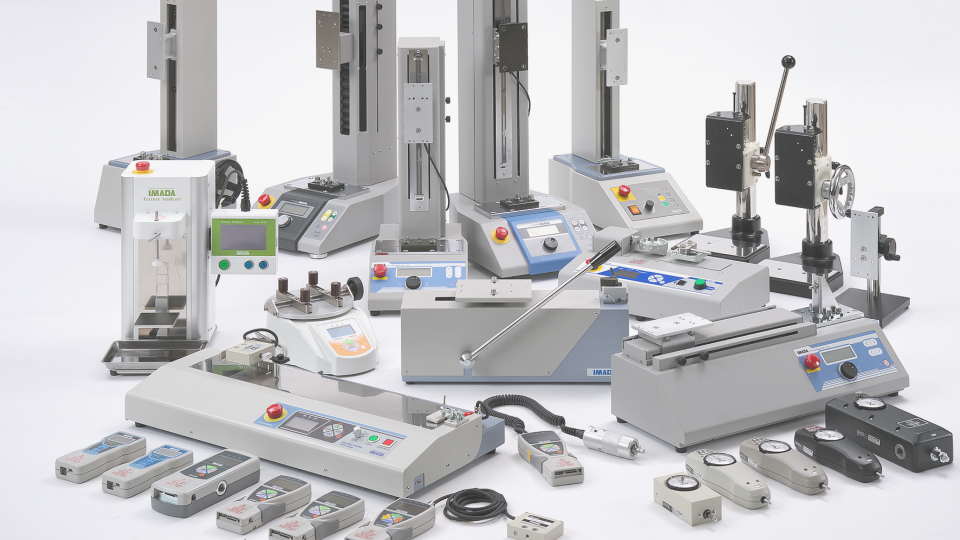
As a part of IMADA’s social contribution project, we lend out IMADA measuring instruments to schools for students to provide supports and opportunities for them to expand their potential and broaden the possibilities for those interested in their scientific research. In this article, we are introducing an impressive project conducted by a student from Kurayoshi Higashi High School, the research project on Milk Plastic and the strength measurement using IMADA Instruments.
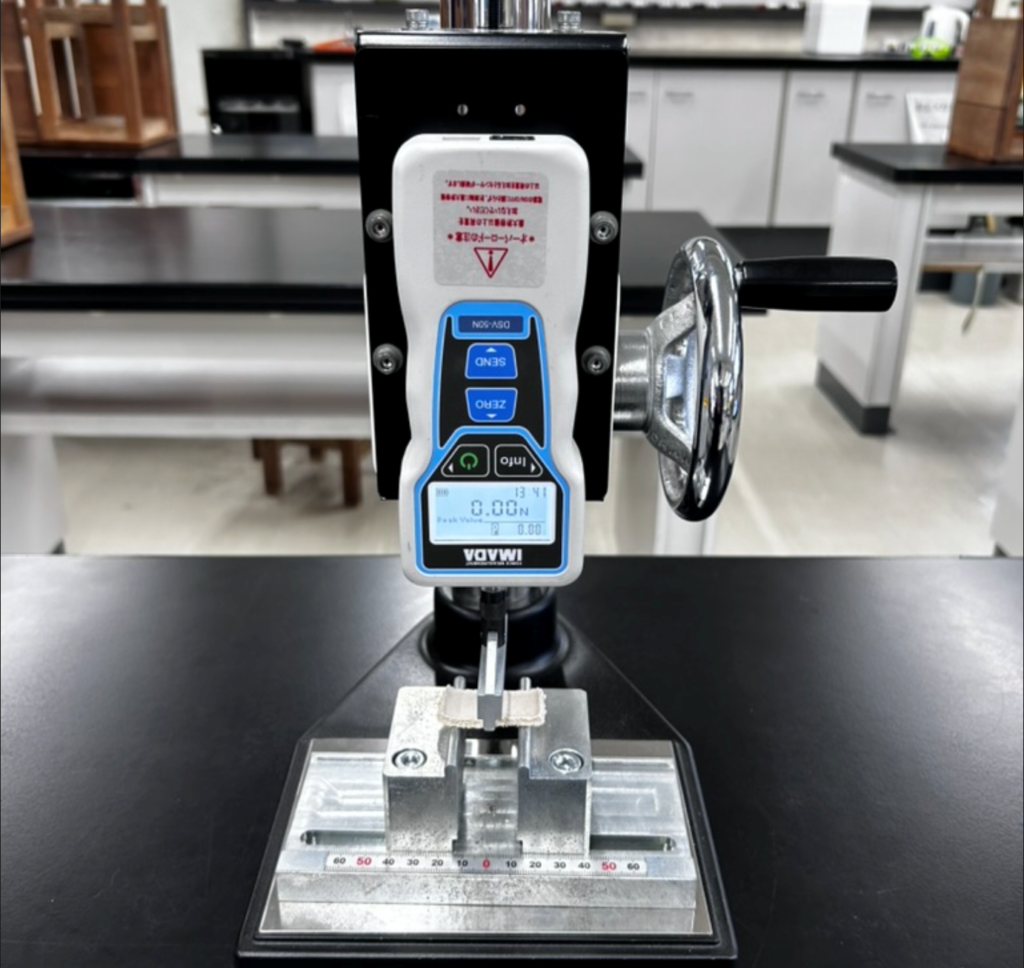
The research involved “Strength Evaluation of a New Material Made from Casein and Tannic Acid Extracted from Milk.” and investigated the strength of the milk-made plastic materials made based on the different blends. IMADA products were utilized in the research for strength evaluation through 3-point bending tests.
A Social Challenge: Focusing on Milk Discarded in School Lunches
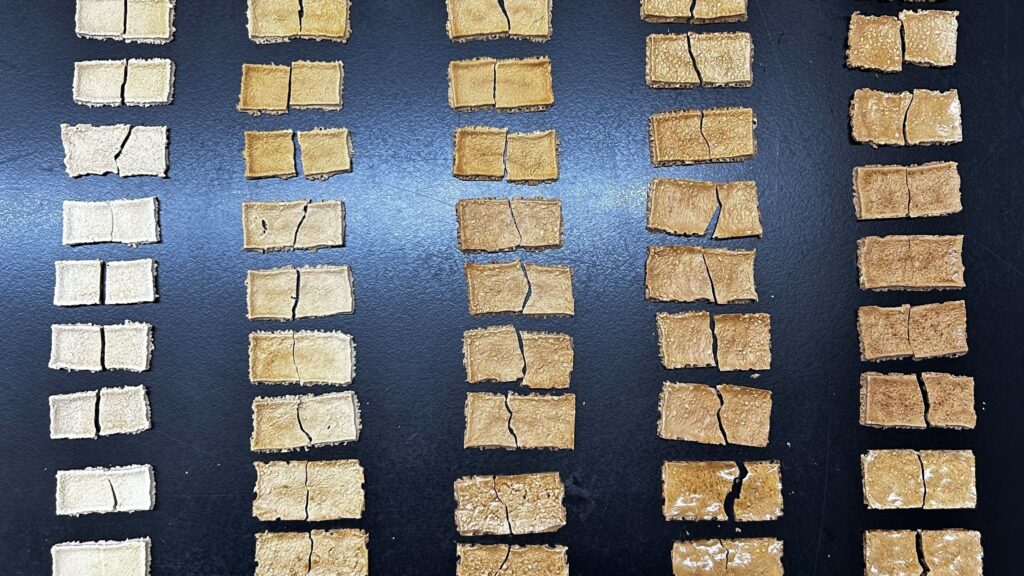
At School, leftover milk from school lunches caught her attention and driven by her desire to “give new value to discarded MILK,” she began her research. With the buck up and encouragement from the local agricultural organizations. She decided to look into Casein plastic. Casein plastic is made by adding acid to the milk protein extracted and dried, and known to have a low environmental impact. She then contacted us for the consultation on the Strength Evaluation of the Plastic Samples she has made from using several different milk blends.
So… the Measurement?
We proposed the measurement method using 3-point Bending Test, considering past research examples. Unfortunately, the first set of samples we received were simply unsuitable for evaluation measurements. She needed to prepare new samples all in the same thickness and shape, ideally uniform in rectangular shape and size, for the accurate strength evaluation assessment to compare the strength. Then… a new set of samples were made in a most ideal uniform rectangular shape, the mission cleared! So, with an excellent response, ready for the next step. We were able to provide her with the measurement method consultations, and the 3-point Bending Test was conducted.
The Surprising Results!
Based on her initial research, she estimated that the higher the concentration of the tannic acid solution added, the stronger the finished plastic would be. Tannic acid has the property of coagulating Casein, so her understanding was that the higher the concentration of the Tannic Acid Solution, the bonding would progress harder. And the results from the measurements are as shown in the graph below:-
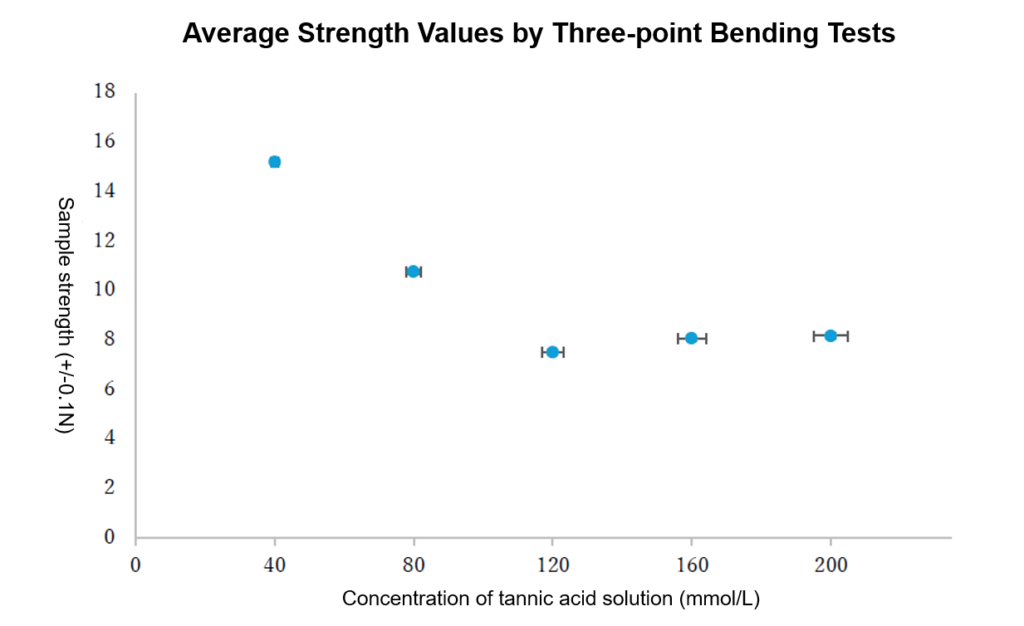
To her surprise, the sample with the lowest tannic acid concentration mixture, 40 mmol/L, produced the value of the highest strength. “It may be due to the possibility that adding too much tannic acid would saturate the binding sites or cause aggregation of tannic acid molecules,” and she also added that she would like to challenge further investigation on the strength caused by the lower tannic acid concentration.
Holding Workshop and Gold Prize in Research Contest
Having completed the initial research planned and understood the result, she held a Casein plastic workshop using the samples she had created during the research at a child welfare facility. Additionally, she had participated in a Research Contest to present her research project, and the result was impressive Gold Prize out of over 8,000 entries. Congratulations!
This research was not just a science project by Kurayoshi Higashi High School student who won a Gold Prize in a research contest, but a project that also gave us the opportunities to learn and see that there are limitless possibilities and potential, contribute to society, and share our thoughts and ideas. Thank you again to the student from Kurayoshi Higashi High School for sharing the research findings.